Auckland’s Local Democracy is Mostly Theatre
Auckland does not have meaningful local democracy where it counts. The local board structure is a carefully engineered consultation theatre that gives communities a voice while ensuring the decisions that actually shape the city remain driven by central government direction and mayoral or Governing Body priorities.
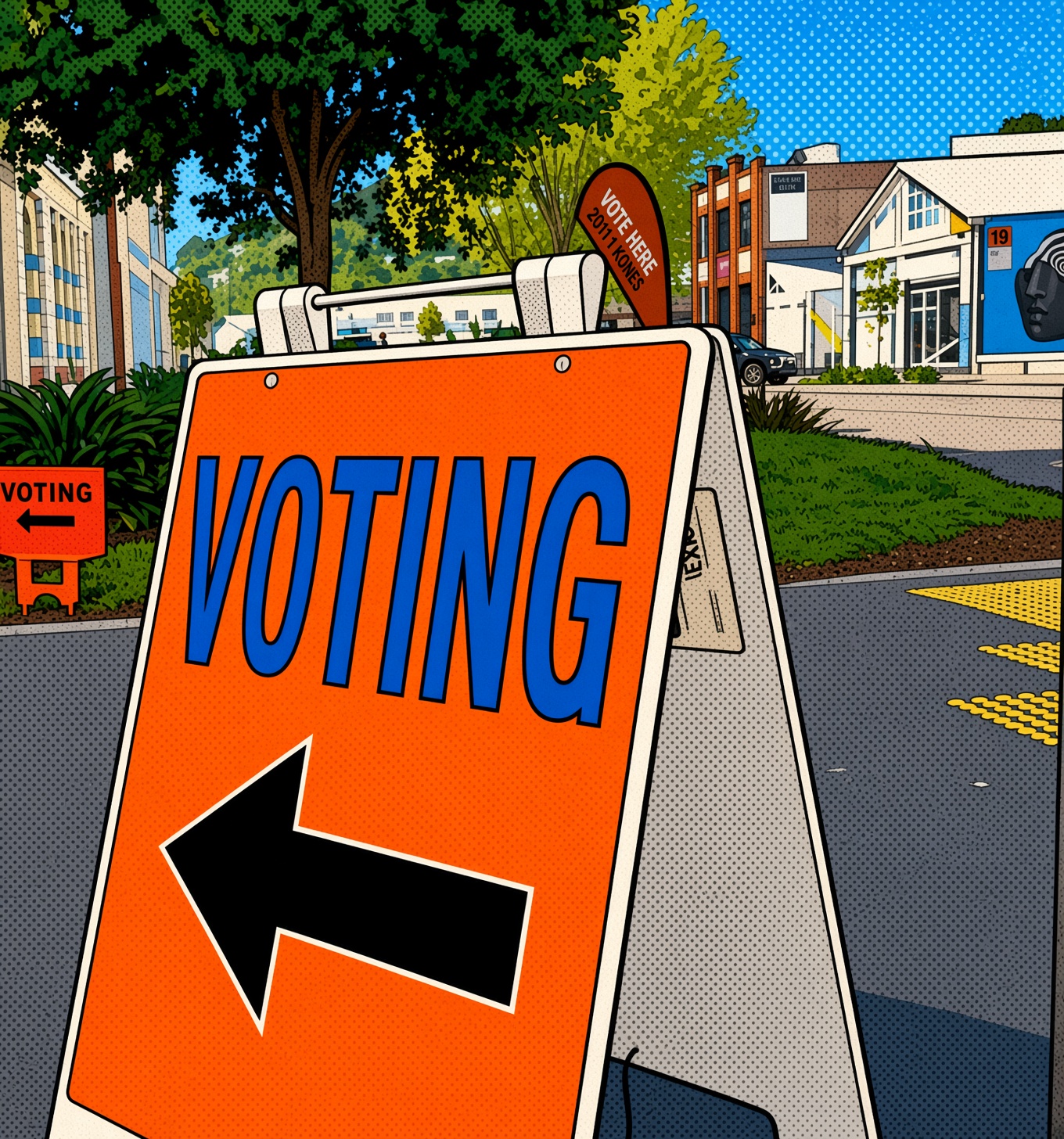
Auckland does not have meaningful local democracy where it counts. The local board structure is a carefully engineered consultation theatre that gives communities a voice while ensuring the decisions that actually shape the city remain driven by central government direction and mayoral or Governing Body priorities. People are invited to speak. They are rarely allowed to decide.
The Local Government Act 2002 sets out a clear purpose in section 10: to enable democratic local decision-making and action by, and on behalf of, communities, and to promote their social, economic, environmental and cultural well-being. Section 14 reinforces this with principles of open, transparent and democratically accountable conduct, and a requirement to have regard to the views of all communities. On paper this sounds like subsidiarity. In Auckland it is not.
The Local Government (Auckland Council) Act 2009 overlays a two-tier structure that deliberately concentrates real power. Section 7 establishes shared decision-making between the Governing Body and the 21 local boards. Section 15 reserves to the Governing Body the regulatory decisions, the financial framework, rates, major strategies and plans, and the governance of council-controlled organisations. Section 16 gives local boards responsibility for the non-regulatory activities allocated to them, the duty to identify and communicate community interests and preferences, the power to propose local bylaws, and the local board agreement. Section 17 then sets the allocation rule: non-regulatory decisions should sit with local boards unless an Auckland-wide approach better promotes the well-being of communities across the region. That exception is broad and routinely available. Once the Governing Body decides an issue has regional implications or requires consistency, the local board’s role shrinks to feedback.
Funding follows the hierarchy
Funding follows the same hierarchy. Local boards receive operating and capital allocations set through the long-term plan and annual plan according to a formula controlled by the Governing Body. They can decide how to spend the money allocated for local parks, libraries, community facilities, events and small projects. They cannot decide how much money they receive, nor can they raise rates independently to fund different priorities. The relationship is parent and child. The parent sets the budget envelope and the strategic direction. The child manages the residual.
This arrangement becomes starkly visible when central government intervenes. The National Policy Statement on Urban Development and the successive housing capacity mandates have forced Auckland to enable far more density than many communities wanted. Plan Change 78, then its partial withdrawal and replacement by Plan Change 120 under special legislation, showed the process clearly. Local boards were consulted. Their feedback was recorded. Independent hearings panels and the Governing Body made the decisions. Central government set the capacity floor and the process constraints. Even after the capacity target was reduced and greater flexibility was given for hazard-prone areas, the core obligation remained: enable the required housing capacity and give effect to intensification policies around centres and rapid transit. Local preference on character, infrastructure readiness or neighbourhood form was secondary. This is not local democracy. It is local input into a nationally directed outcome.
When the contests themselves are compromised
The weakness of the system is not confined to the big strategic decisions. Even the limited elections that produce local board members have proved vulnerable. In the 2025 local elections the Papatoetoe subdivision of the Ōtara-Papatoetoe Local Board recorded a 7.5 percent rise in turnout while the rest of Auckland saw participation fall. A petition by unsuccessful candidate Vi Hausia led to a Manukau District Court hearing. Judge Richard McIlraith found that at least 79 voting papers had been cast by someone other than the intended elector. Of 53 of those papers examined in court, the large majority had gone to the winning Papatoetoe Ōtara Action Team. The judge concluded that fraudulent voting had permeated or infected the election to such an extent that it materially affected the result. He declared the election void. The High Court later upheld that decision. A court-ordered by-election followed in early 2026. Fresh allegations of vote-rigging involving stolen ballot papers from the 2025 Manurewa Local Board election were reported to Auckland Council and the Serious Fraud Office as recently as August 2026 and remain under assessment. These cases are not abstract. They demonstrate that the postal voting system used for local elections can be exploited at scale, and that the integrity of even the narrow democratic contests that exist can be compromised.
What genuine subsidiarity would look like
Genuine subsidiarity under the Local Government Act would look different. It would place primary competence for land-use and density settings with the local level, subject only to genuine regional or national externalities that cannot be managed locally. It would give local boards meaningful fiscal power, either the ability to set rates for local priorities or a far larger and more controllable share of general rates, with clear accountability to voters for the trade-offs. It would give them binding influence over the council-controlled organisations whose decisions determine whether growth is supported by transport and water infrastructure. It would allow local bylaws or plan variations to diverge from regional defaults where community preference, infrastructure capacity or place character justify it. The current legislation does not deliver this. The allocation principles in section 17 of the Auckland Act are written to permit the reverse: regional override whenever efficiency or consistency can be claimed.
The result is a city that people endure more than they own. Ownership requires agency over the decisions that change the physical form, the fiscal burden and the daily experience of place. When density, growth location, major infrastructure sequencing and the overall rates framework are set regionally or nationally, and local boards are left managing parks and libraries within budgets they did not set, the psychological contract is one of endurance. The low and declining turnout in Auckland local elections is not an accident. People disengage when they correctly perceive that the vote does not move the levers that matter most, and when even the contests that remain can be undermined by fraud.
The super-city trade-off
The 2010 super-city was designed for scale and regional coordination after years of fragmented councils. It achieved that goal. Local boards were the political price of acceptance, a mechanism to provide local voice and limited local decisions without threatening regional coherence. They perform that limited role competently when the process is clean. They do not, and were never structured to, deliver deep democratic ownership of Auckland’s development trajectory. Recent proven and alleged electoral fraud only sharpens the point: the architecture itself is thin, and its integrity is not guaranteed.
Within the existing legal framework the tools available are limited but real. Local boards can use their plans and agreements aggressively to force issues onto the regional agenda. They can exercise the section 16 duty to identify and communicate community interests on every major strategy and plan, making non-consideration politically costly. They can propose local bylaws. They can form coalitions across boards. Individuals and groups can use LGOIMA, formal submissions and the special consultative procedure. Structural change, however, requires either legislative amendment to the allocation and funding rules or a reorganisation process through the Local Government Commission. Neither is currently on offer at the scale required.
Until that changes, Auckland’s local democracy will remain what it is: a theatre in which communities perform the role of being consulted while the real decisions continue to be made elsewhere, and in which even the supporting elections have shown they can be compromised.
Join the discussion
Community members are invited to add perspective, evidence, or a sharp question. Be specific and keep it civil.