Locked Out of Our Own Backyard
Under the Hauraki Gulf Marine Protection Act 2025, recreational fishing is banned in the new High Protection Areas — yet two of those same zones still allow limited commercial ring-netting. That is not protection; it is a political carve-out dressed up as conservation.
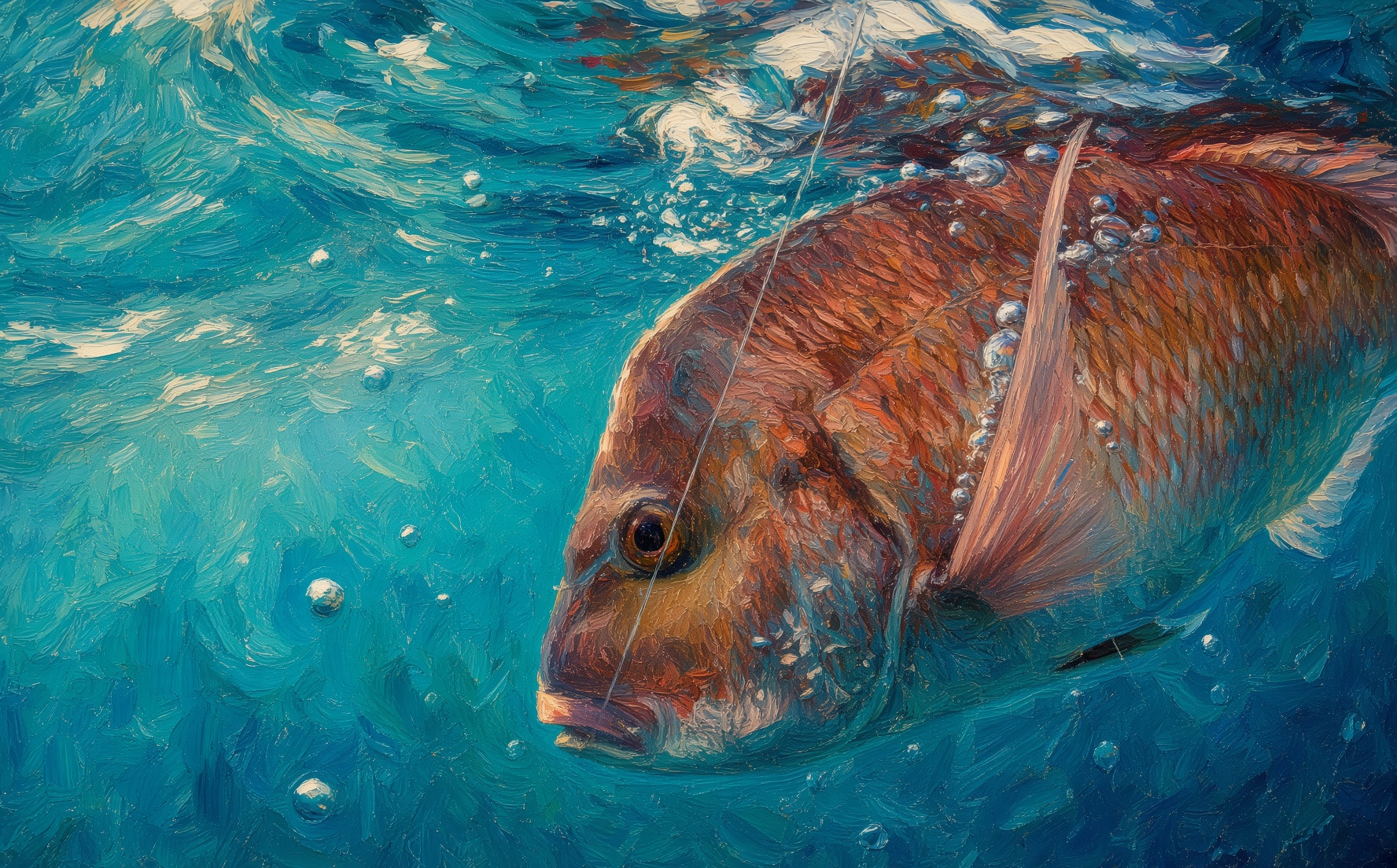
I have fished the Waitematā and the wider Hauraki Gulf for decades. I know the channels around Rangitoto and Motutapu, the edges of Kawau, the spots where the current brings the kahawai and the bigger snapper move through in autumn. Those places are not just coordinates on a chartplotter. They are where my kids learned to hold a rod, where mates still meet before first light, and where ordinary Aucklanders put kai on the table without a commercial licence or a customary authorisation.
Under the Hauraki Gulf / Tīkapa Moana Marine Protection Act 2025 those same places are now High Protection Areas. Recreational fishing is banned. Full stop. You cannot drop a line, soft-bait, or even gather a few mussels by hand. That is the rule for the public.
Yet two of those "high protection" zones, Rangitoto and Motutapu HPA and Kawau Bay HPA, still allow limited commercial ring-net fishing. A handful of operators who fished those areas in 2021 to 2023 can keep setting nets between 1 March and 31 August for kahawai, grey mullet and trevally. Customary non-commercial fishing continues across all the HPAs with the right paperwork. The rest of us are told to stay out for the good of the ecosystem.
That is not protection. That is a political carve-out dressed up as conservation.
What the law actually does
True marine reserves under the Marine Reserves Act 1971 are no-take. Nothing comes out. The two extensions (Goat Island and Cathedral Cove) meet that standard. The twelve High Protection Areas do not. Section 21 of the 2025 Act prohibits recreational and commercial fishing in HPAs, then carves exceptions for authorised customary take and, in those two specific zones, for commercial ring-netting under section 23 and the related regulations. Seafloor Protection Areas ban the worst bottom methods but still allow line fishing and hand gathering. Over 90 percent of the Gulf remains open to recreational fishing, according to DOC. That statistic is used as reassurance. It is also a distraction.
The areas closed to us include some of the most accessible and productive water for weekend fishers launching from Auckland. Pressure does not disappear when you draw a purple line on a map. It moves. Boats that once worked the Rangitoto Channel or the Kawau edges now crowd the remaining open water. That is displacement, not recovery.
The hypocrisy is obvious
LegaSea and the New Zealand Sport Fishing Council have been clear: this creates a dangerous precedent. You cannot label an area "high protection" and then grant exclusive commercial access inside it. Once the principle is broken for a few ring-net operators, the next argument becomes easier. The commercial sector pays significant cost-recovery levies; recreational fishers do not. That economic fact has been used to justify favouring the former. It does not justify locking the public out of a Marine Park that was established, in part, for the people who live around it.
The process that produced this outcome is equally telling. Sea Change was supposed to be collaborative. Recreational representatives spent years in the room. The final Act still contains a late amendment that prioritised a narrow commercial interest after select committee scrutiny. When recreational fishers protested, the response from some ministers was that it was "a bit late." That is not how you treat a sector that has repeatedly offered conservation measures of its own.
Real problems remain unaddressed
If the goal is genuine restoration of the Gulf, closing a few percent of water to recreational anglers while leaving commercial extraction inside "protected" zones and continuing bottom-contact methods across most of the park is inadequate. The deeper failures sit in the Quota Management System itself, in the continued allowance of destructive gear in open areas, and in the land-based sediment and contaminants that pour into the Waitematā every time it rains. None of those are fixed by telling a father he can no longer take his kids fishing off Motutapu in the hope that a handful of commercial nets in winter will somehow be less harmful.
Spillover is often promised. Evidence from true no-take reserves shows local increases in abundance and size. Partial closures with ongoing extraction produce weaker, slower, and more contested results. We already have data from Goat Island. We do not need another experiment that treats recreational fishers as the primary problem while commercial activity retains privileged access inside the same boundaries.
What should happen next
Demand that the three-year review of the ring-net exception is rigorous and public. Insist that any future "protection" that bans public fishing must also ban commercial extraction in the same waters. Push for proper ecosystem-based management of the fishery rather than a patchwork of closures that shift effort without reducing overall take. Support genuine no-take zones where the science justifies them, and oppose the dilution of the term "protection" until it means almost nothing.
I still want a healthier Gulf. I want my grandchildren to catch fish in these waters. Closing the public out while leaving the door ajar for a few commercial operators is not how you get there. It is how you breed cynicism and shift the burden onto the people least able to influence the next amendment.
Join the discussion
Community members are invited to add perspective, evidence, or a sharp question. Be specific and keep it civil.
No comments yet. Be the first to weigh in.
.png)