The land that taught the teachers should teach again
The old teachers' college at 74 Epsom Avenue is the rare Auckland site already a school in everything but the Gazette notice. Two of the country's strongest state schools have asked the Crown to back a co-ed state school on the land, opening in the buildings that are already there.
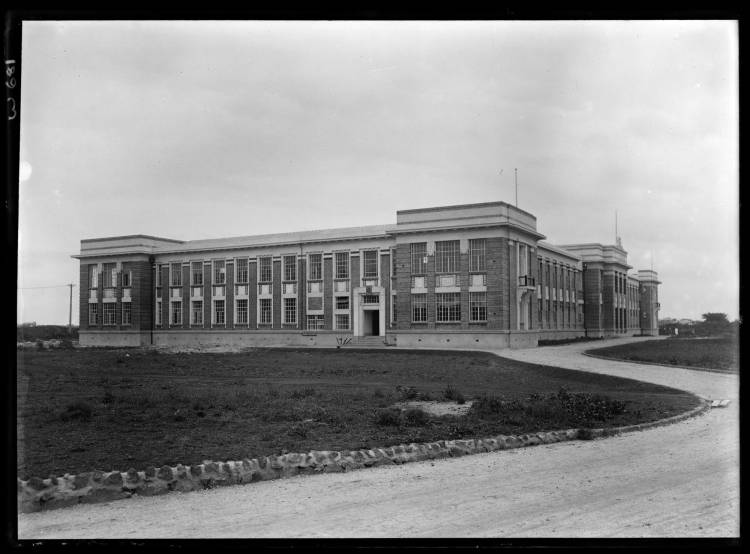
The old teachers' college at 74 Epsom Avenue is the rare Auckland site that is already a school in everything but the Gazette notice. Teacher training has stood there since 1926. The Faculty of Education and Social Work left for the city campus before Semester One 2024, and the university is now working through the sale. In July 2026 the principals of Auckland Grammar and Epsom Girls' Grammar, Tim O'Connor and Brenda McNaughton, and their boards asked the Crown to back a state high school for boys and girls on that land, opening in the buildings that are already there. It is a serious offer from two of the country's strongest state schools. It also sits on whenua that mana whenua have never treated as empty.
Ngarimu Blair, then deputy chairman of the Ngāti Whātua Ōrākei Trust, put the history plainly when a sale was first discussed. The campus was part of the second gift of land to the Crown in 1841, inside a block of about 13,000 acres taking in Westmere, Point Chevalier, Mt Albert and Newmarket. The grounds themselves were mostly historic kūmara and taro gardens supporting the pā complexes of Maungawhau and Maungakiekie. Within them is Te Pou Hawaiki, which he described as one of the most sacred sites to Ngāti Whātua and to their Waiohua relations: the place where foundation ancestors set down soil brought from the Pacific to anchor themselves in a new land. University researchers later recorded what the eye can no longer see. Around 28,000 years ago an eruption formed a small scoria cone, about five metres high, a tapu place with a tūāhu. Quarrying took the cone. The Gate 2 parking area and the rim on which the wharenui stood are what remain of it. A school purchase has to start from that fact. The quarried rim belongs in the brief, and it is not a convenient pad for a laboratory block.
The marae already carries the name. Te Aka Matua ki Te Pou Hawaiki opened in 1983 as the second marae in a tertiary setting in the country, and the first for the University of Auckland. Tarutaru Rankin made the wharenui Tūtahi Tonu from a prefab meant for a music room. In November 2023, on its fortieth birthday, a whakamoe ceremony put the whare to sleep. The original structure could not survive a move. The tukutuku and the whakairo could. Master carver Katz Maihi refurbished them, and on 10 August 2024 the wharenui reopened on the city campus as Ngā Tauira Marae, a name gifted by Ngāti Whātua Ōrākei. The taonga have gone to a good home. The whenua has not. Any new school on this site should treat the quarried rim as a place to be identified, protected and interpreted with mana whenua. A school marae, if one is wanted, is a matter for invitation. The university's own marae history project is already gathering the stories of the people and the whenua. A new board would do well to ask for that work to travel with the land.
The statutory role of iwi is real, and it is collective. The Ngā Mana Whenua o Tāmaki Makaurau Collective Redress Act 2014 gives the Whenua Haumi Roroa o Tāmaki Makaurau Limited Partnership a right of first refusal over the university's table 3 land, held for the thirteen iwi and hapū of the collective, out to 2186. Blair's point in 2018 still holds. An offer, if one is required, is worked through with the Waiohua iwi and with Ngāti Paoa and their Hauraki relatives, not by any one rōpū alone. A transfer to the Crown for a state school is an exempted disposal under section 128. It does not hand the limited partnership a right to take the title on that step. It does require, under section 144, notice at least twenty working days beforehand, with the reasons. That notice should be treated as the opening of the establishment. The right survives on the title, so any later sale of a surplus lot back out of the Crown must be offered. Designing the school so that no such sale is needed, with the fields kept, the rim kept and the avenue kept, is the practical way to honour the redress. Ngāti Whātua Ōrākei have said for years that they are keen to reacquire former estate. A Crown school does not close that aspiration. It keeps the whenua in public education, which is the use closest to the gift, and it gives the collective a designed place in governance, naming, and the protection of Te Pou Hawaiki, written into the Gazette constitution under section 190(6).
The same care belongs to the other significant fabric. On Arbor Day 1935 an avenue of pōhutukawa was planted along the drive to the Memorial Gates in Poronui Street, dedicated to the teachers of the Auckland Province who died in the First World War. Tōtara stand between the teaching blocks. A kauri stands by C Block. The 1931 pool, opened by the Minister of Education of the day, and the fields long shared with Auckland Normal Intermediate, are part of the same continuous school landscape. The Epsom Precinct, 8.48 hectares at 74 Epsom Avenue, already exists to enable education in that setting, beside the two schools that share it. The Crown set apart parcel of 10.9054 hectares, gazetted in July 2017 and transferred into university freehold in September 2018, is the title core. The wider 15 hectare campus includes peripheral houses that a schedule should sort, keeping what the school and the adjoining schools need. Scheduled and notable trees, the memorial avenue, and the rim of Te Pou Hawaiki should be constraints on the masterplan before an architect is appointed.
Around that protected core, the network case is straightforward. Auckland Grammar opened 2025 with 2,757 boys. Epsom Girls' Grammar stood at 2,316 in July 2026. Mt Albert Grammar, about 3,600 in mid 2025 and already closing its out of zone door, is planning for 4,000 to 4,500. Kohia Terrace, about 400 pupils, has been clear that a housing neighbour would force a rebuild. Auckland Normal Intermediate is at capacity, and another 200 to 300 enrolments would need new classrooms. A state school for boys and girls here is the option this part of the isthmus does not have. It takes growth that would otherwise land on the Grammars, leaves their zones and their in zone entitlement untouched, and gives Auckland Normal Intermediate and Kohia Terrace a booked claim on the pool, the courts and the gym, with first call on the fields in school hours and the Poronui Street link left open. The Kohia Centre, built as a teacher resource house, can go back to those two schools. The early childhood centre stays until its relocation clause is honoured.
The buildings are a head start once they are certified for school use, not a finished school. The Sylvia Ashton Warner Library can become the learning centre. The Duncan McGhie and Owen Gilmore theatres can take assembly, drama and examinations. A Block can take administration. The gym, dance rooms and music auditorium can carry physical education and performing arts while the senior specialist rooms are built. Tutorial blocks become general classrooms after acoustic separation, toilet numbers and escape widths are rebuilt for school pupils. Schools sit at a higher structural standard than a teachers' college, so a detailed seismic assessment is part of the opening programme, not an afterthought. Science laboratories, technology workshops and a learning support suite are new buildings, sited off the rim and off the memorial avenue. Change of use under the Building Act is the gate. Meet it, and the existing fabric saves years against a greenfield site. Ignore it, and the opening date is only a hope.
Getting there is a sequence, and each step is ordinary public law. The university needs Secretary of Education consent to dispose, plus Crown clearance and a finished Public Works Act file. Offer back to former owners is a separate question from the iwi right, and a campus built across amalgamated 1920s parcels is the usual case for an exemption where the character of the land has changed. The Minister then establishes the school by Gazette notice under section 190, names it with mana whenua, classifies it as a secondary school for boys and girls, and can phase the year levels so Years 9 and 10 open once the converted blocks are certified. Section 190(6) is what allows a constitution with a designed place for the collective and a services relationship with the two Grammar boards. The new board holds the occupancy under section 161. The Grammar boards do not own the land. Consultation under section 209 brings every affected state school into the scheme before the purchase is unconditional. An enrolment scheme under sections 72 to 75, with a home zone that does not cut the Grammar zones and an out of zone ballot large enough to matter, is what turns relief into a number. A bus court on Epsom Avenue, fed by the 27H, 27W and 64, with Maungawhau Station a short ride up the ridge, fits a suburb that is about to house more people and that already sits under the maunga the gardens once fed.
The price has to be market. Reported figures of $150 million and $250 million are not a valuation of a defined title schedule. The university is owed a clean exit and capital for its city campus. Unused Ministry land, including the holding beside Alexandra Park bought in the 1990s, is the honest offset if the title and the value stand up. What the Crown would be buying is the last assembled education campus on this part of the isthmus, already used for teaching, already beside two schools that need it kept open, already carrying a memorial avenue and the footprint of Te Pou Hawaiki. Establishing the school with the collective, protecting that footprint, and keeping the land in education serves the pupils, the adjoining schools, and the people whose ancestors anchored themselves there.
Join the discussion
Community members are invited to add perspective, evidence, or a sharp question. Be specific and keep it civil.
No comments yet. Be the first to weigh in.